Trailcam scouting

The last week of August is too early. The corn and soybean fields of neighboring farms are not yet a wildlife cornucopia, lush with filled-out ears and pods packed with beans. No hard frost has yet arrived to kill the mosquitoes and buffalo gnats. The onset of the whitetail does’ estrus – the rut that maddens the bucks – is probably six weeks away.

Scouting for patterns of deer movement, even passively scouting with trail cameras, will not reveal what the daily habits of the deer will be in another eight or nine weeks when autumn has taken hold of the North Country. The only reason I scout is my restlessness. I am eager, almost frantic, for the bow season to begin.

Siting the cameras alongside the logging roads and most-used deer trails is the least of my obsessions. I’ve already set up two ground blinds and moved one ladder stand, and I will no doubt move them again when the trailcams show that deer are walking through those openings in the woods only after nightfall.

No matter. Sometimes the photos of our farm’s resident wildlife are worth all this misdirected effort. A big doe being pestered by her twin fawns, a hen turkey and her seven poults blundering through the brush like a first-graders lost in the library, the huge face of a flicker staring eye-to-lens at the camera, squirrels playing tag, a coyote hunting on a foggy night. The camera will wait with infinite patience for the creatures of the wild to reveal themselves. I am able to sit still for only an hour at most, and so I miss the secrets of their undisturbed lives.

I never would have seen the eight-point buck with antlers in velvet, at his ease on an early morning stroll along the lane I mowed in June to drive the pickup to a red elm I had cut for firewood. I had never seen him before, or do not think I had. He could be one of the six-pointers I watched last year, now in his fourth or fifth season and coming into his full majesty.

This buck was not the biggest-antlered and certainly not the biggest-bodied deer I have seen during our 35 years on the farm. But his manner, carriage, penache, confidence, his noblesse oblige attitude toward lesser creatures make his unexpected cameo appearance the great performance of this August.

Maybe I will see him up-close and personal in October.

_________________________________________________


Posted in Deer Hunting | Tagged , , | Leave a comment

Stone deaf

I wear hearing aids, the type that has tiny microphones that amplify sounds. These help, but do not restore your hearing.

Most of all I miss the birds singing in the early morning.

Many other sounds are lost to me since my hearing faded and was gradually lost over the past 15 or 20 years: almost all music, the evening cries of coyotes as they set out on the hunt, the crunch of dried leaves on the woodland floor as a deer approaches my tree stand, the flow of fast water over boulders in a stream, the ripping-canvas whoosh of wind through mallards’ wings as a flock lands on the pond, the whistle and flutter of a rising woodcock, the sweep of the wind through prairie grass, the rustle of cool afternoon breezes through trees in full leaf, the shrill of a soaring red tail hawk, and the voices of my grandchildren and most women that fall outside my audible range.

On the upside, there are several unheard noises that could be regarded as a blessing: worrisome squeals and clatters and ticks from my old pickup truck, whistling teakettles, alarm beepers on microwave ovens and clocks, most on-screen dialogue and background music, dripping water faucets, the squeak of the stairs in our old farm house, and strangers’ disparaging remarks muttered behind my back about my lack of fashion sense and proper grooming. And, of course, political advertisements.

But in general, hearing loss is bad. Terrible.

Continue reading

Posted in Uncategorized | Tagged , , | 2 Comments

Hitting 300

Death steals everything except our stories.
  — Jim Harrison, poet, novelist, screenplay, and short story writer, from his collection of poems titled In Search of Small Gods.

Hitting 300

The number took me by surprise: three hundred. That is the current count of blog essays, stories, poems, and photo essays I have posted since I launched Dispatches from a Northern Town less than seven years ago.

Although I was wary of this blogging business, I took a chance. From the outset my goal was to create blog posts that were thoughtful and introspective, my personal observations about a complicated and often confusing world, and as befits dispatches about a writer’s journey through life they reveal a wide range of moods: humorous, melancholy, serious, fanciful, maudlin, cheerful, pessimistic, optimistic…  My intent was to express these reflections in stories and essays of about 1,000 words, probably because that is the limit of my own attention span when reading an online essay.

A good portion of these blog posts recount time spent in the outdoors. A small number of these offer advice on the “how to” skills of hunting, fishing, camping, hiking and other recreations, but many more focus on the “why” and “wherefore” of my passions for the experiences that fill the heart and mind and soul with joy and wonder. And, unfortunately but realistically, a good share express my despair that our time spent in the wild and the wilderness is nearing an end in this Anthropocene era.

A few of the Dispatches from a Northern Town essays are topical, political, and social commentary. Almost one-fourth of the posts are stories, essays, and poems about dogs – which is appropriate because bird dogs have been central to my life for more than 50 years, and they have taught me much of what I know. Another fourth are about my hunting companions that I call The Over the Hill Gang. They taught me the rest of it.

Over the previous seven years I have compiled these blog posts in six published collections of essays, short stories, and poems: Crazy Old Coot, Old Coots Never Forget, Coot Stews, A Limit of Coot, North Country Tales, and A View from the North Country. A seventh collection is due to be published in October: Coot Dogs. I have also written and published three novels: Hunting Birds, Ivory and Gold, and The Executioner’s Face.

A friend and fellow writer, Keith Lesmeister, author of the short story collection We Could’ve Been Happy Here, has called me the most prolific writer he has ever known. This is an intentional exaggeration. My word production does not match that of my 13-year career as a newspaper reporter, editor, and columnist when I wrote nearly a thousand editorials, opinion pieces, and sports columns, plus uncounted news articles and reports.

Still, being retired and not pressured by press deadlines, I was taken aback to see that my blog posts had reached 300. Maybe this merits some kind of celebration. A hand-rolled cigar and a good mug of brewpub ale should be in order. On the other hand, it should be a private, subdued observance. My most-viewed blog post has been Lefever Nitro Special, an essay that I regarded as rather mundane, while one of my least viewed has been Christmas gifts for my grandchildren, which I thought was one of my best. So I’m not taking my literary talents too seriously.

But then I never claimed to be anything more than a journalist.

Anyway, for better or worse I’ve reached the 300 mark. The odds that I will produce 400 are, as they say, about the same as a lace valentine in the fires of hell.

Cheers. I’ll let you know the date in October when the next collection of essays is published. Then we can hoist a mug at the start of bird season and really celebrate.

____________________________________________

More essays and stories about life in the North Country are published in my six collections of essays and three novels, available through Amazon.com at  Jerry Johnson Author Page


Posted in Uncategorized | Tagged , | 4 Comments

Catch-pen battleground

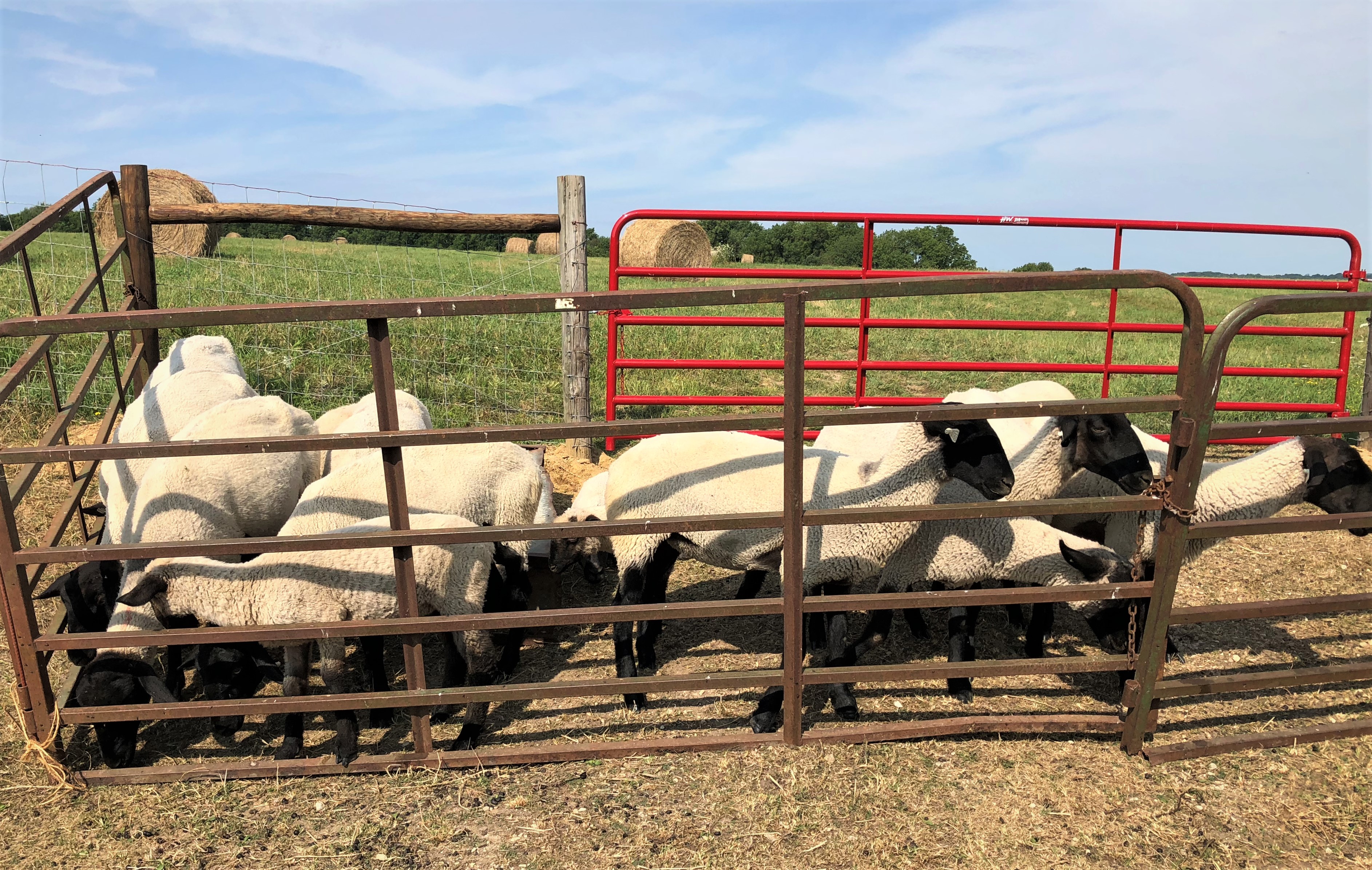
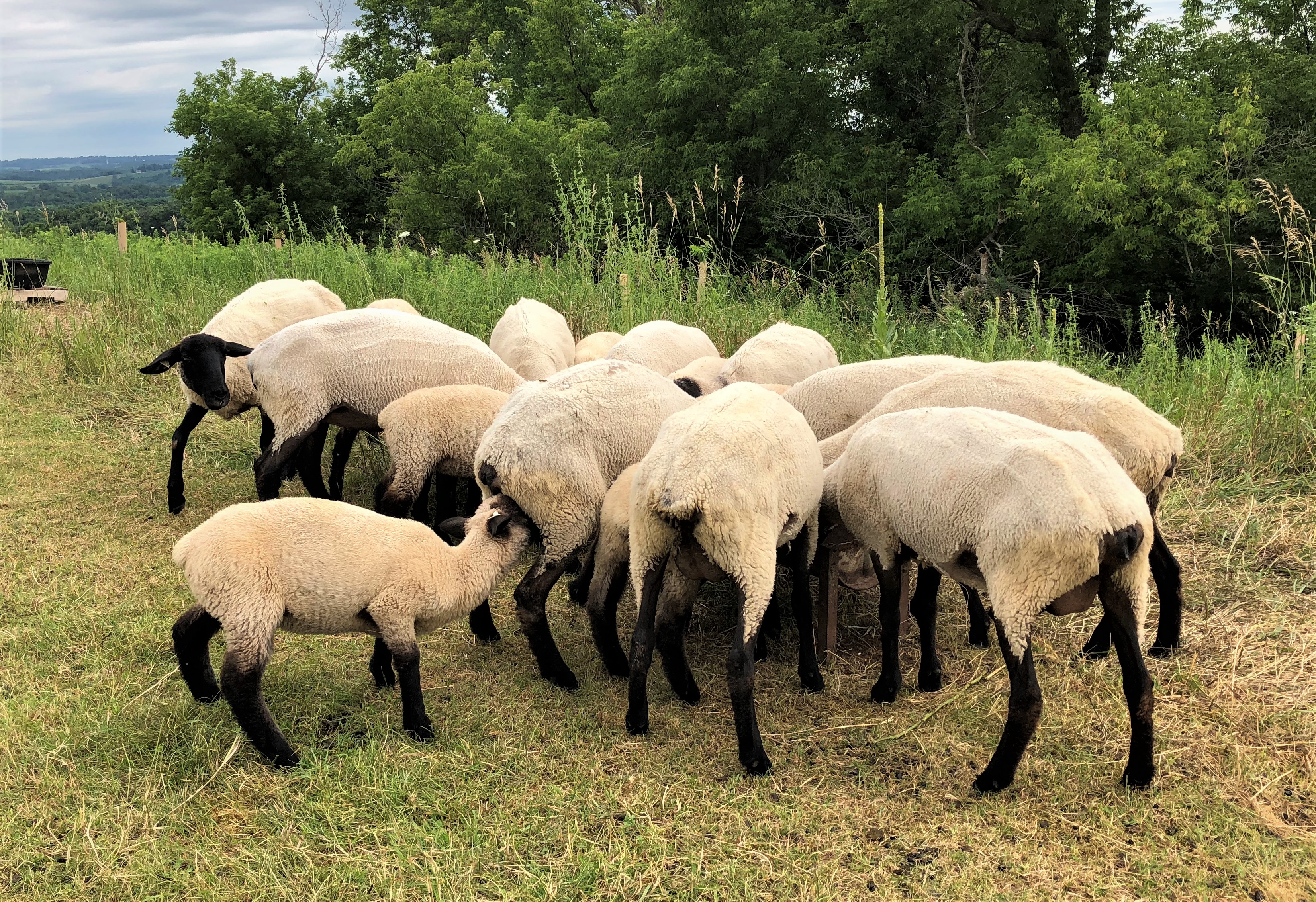
A bucolic scene: a dozen Suffolk lambs grazing the hillside beside their mother ewes, their gentle bleats and baas a sort of pastoral music, their leaps and head-butts so much exuberant frolicking on a rustic playground, their sleepy huddles in the shade of the trees at midday a soporific for my worried mind and weary body. Peaceful, tranquil, serene, soothing.

Until you try to catch one of the little demons.

Summer’s end was nearing, and the time had come for the lambs to leave the pasture, the wether lambs to be fattened for market and the ewe lambs to be sold for breeding stock. Round them up, herd them into a catch pen, and load them into a livestock hauler. Frisky little balls of wool with perky ears and open, guileless faces – how difficult could that be?

Continue reading

Posted in Sheep catch-pen | Tagged , | 2 Comments

Best birthday present ever

Autumn of 1987. A stressful time of my life. Work issues. We have all been there. I was in desperate need of something to lift my spirits.

Lunch hour, as I was walking to the weight training room on campus for my daily workout, my beautiful blonde wife met me at the entrance to the Field House, a complete surprise, and presented me with my best-ever, and most-needed, birthday present.

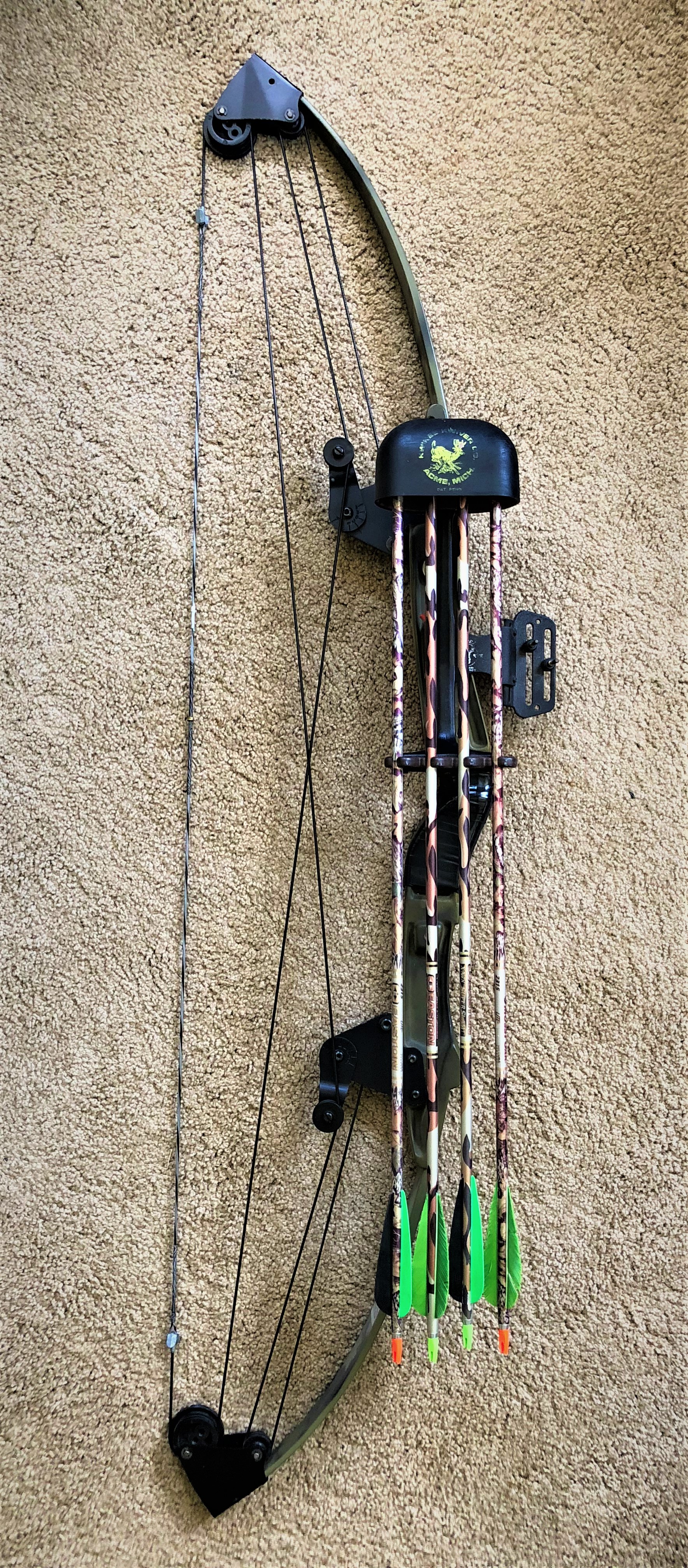
A Bear Whitetail Hunter compound bow.

The gift was much more than the bow; it was a message that life would go on, and things would get better. And she was absolutely right: life did go on, and things got much better.

Hunting got better that fall, too. For years I had hunted with a Bear Kodiak 50-pound recurve bow. I had no reason, or desire, to switch to a compound bow, and I felt a little smug and arrogant that I was a “traditional” bow hunter.

In July, while working on our 135-year-old farmhouse, which was in need of much repair, I hoisted a sheet of three-quarter-inch plywood and tore the rotator cuff in my right shoulder. I declined a suggested surgery, and I’m glad I did, but the physical rehabilitation was one of the most lengthy and painful I have experienced (and there have been several others).

Determined that I would bow hunt again in the fall, I did not miss a day of rehab workouts. But progress was slow. And it soon became apparent that at age 38 my shoulder would not completely heal. There would be some loss of flexibility, strength, and range of motion.

With effort I could draw the 50-pound recurve, but I could not hold it steady at full draw. My days of traditional bow hunting were clearly at an end, and I began looking at a compound bow in the sporting goods section of the local hardware store.

When my prospects of continued steady employment looked cloudy in September, the thought of purchasing a compound went way down on my priority list. I didn’t even hunt that fall.

The Whitetail Hunter cost (as I remember) $88. Still a lot of money when we were struggling to eke out a household budget with three children, vehicles in need of repair, mortgage payment, groceries, and utilities.

Took me most of the next summer to learn how to shoot that Whitetail Hunter bow. The concept of a “let-off” in bowstring draw weight was completely foreign to me, and I had to change my technique from “draw, point, and immediate release” to draw, hold, steady, aim, and release.” It seems to me the let-off was only about 40 percent – it is 75-80 percent in the compound bows on the market today – and the draw weight was 65 pounds, which I adjusted down to 55 pounds to accommodate my injured shoulder. Still, 33 pounds of string tension when I held the tips of my fingers to the corner of my jaw – my arrow release point – made all the difference.

I was back in the game.

In October of ’88 I took a six-point buck, and in and November of ’89 a small-basket eight-pointer. If I had regrets about leaving my Bear Kodiak recurve bow hanging on the wall, I cannot remember them. A couple years later I (foolishly) sold the Kodiak.

That Bear Whitetail Hunter served me well for several years, but of course I succumbed to the siren song of a “better” compound bow: shorter, more let-off, faster arrow speed, less noisy, lighter. I shoot a few arrows at paper targets with the Whitetail Hunter every fall, and I vow I will take it hunting after I take the first deer of the season, but of course I never do.

I will never, ever sell it, regardless of how much value it acquires as an “antique.” This old bow has a special place in a hidden chamber of my heart, a place that holds an enduring security: when times are dark, life will go on, and things will get better.

____________________________________________

More essays and stories about life in the North Country are published in my six collections of essays, available through Amazon.com at  Jerry Johnson Author Page

Posted in Bear Whitetail Hunter Bow, Bow Hunting | Tagged , , | Leave a comment

Heat index

Before nine o’clock in the morning the temperature had risen to 82 degrees, dew point was 77 degrees, and humidity was 97 percent This day in the last week of July was heating up to surpass a 103-degree heat index.

The heat index. It has been around since early in the 20th century when it was more commonly known as the Temperature Humidity Index (THI). In the late 1970s or early 1980s it was formalized as a component of weather reporting by the National Weather Service which defined and charted it as “The heat index, also known as the apparent temperature, is what the temperature feels like to the human body when relative humidity is combined with the air temperature. This has important considerations for the human body’s comfort.”

And for human and animal existence.

On the hottest morning in July my bird dog Abbey and I were late starting our daily walk around the perimeter of the hayfield. We fed and watered the sheep, dawdled a bit by the gate to count noses, checked to see that all the lambs and ewes were spry and active, and then rolled in some fresh manure. Well, I refrained from the manure-roll, but Abbey apparently likes to take home some remembrance of her visit with the sheep.

When we set out to do chores, it was already hot and muggy. Too hot for a mile-long walk. But the organic farmer who hays our field had round-baled it the day before, and I was curious to count the number of bales. I think I counted 38 by the end of the hike, but I was a little loopy with the heat so I cannot be sure.

A half hour later we were stopping to rest in every patch of shade along the route. Even in the shade, it was broiling hot.

This does not bode well for the month of August, the dog days of summer, when daily temperatures and humidity have usually risen to their peak in the North County. For the South Country, where friends of ours live in Texas and Alabama and Florida, the outlook is much worse in this Anthropocene era of climate change and global warming

Continue reading

Posted in Uncategorized | Tagged , , | Leave a comment

Sturdy sheep

NEARLY 50 YEARS have passed since I last tended sheep. A lot has changed over those 50 years. Almost everything, in fact: technology, scientific research, medicine, education, industrial production, communication, transportation, international trade, sports, music, entertainment…

Sheep, not so much. And that is a good because in this troubled and turbulent age I need assurance that some things quietly and steadfastly endure

I remember sheep being a lot of work: vaccinating, worming, shearing, spraying for flies, checking eyes and hooves, and fitting a breeding (marking) harness onto the rams. That was a circus act!

Continue reading

Posted in Sheep, Suffolk Sheep | Tagged , | 4 Comments

Major League Baseball takes a hit

Major League Baseball ain’t what it used to be.

The style of play of the game that “used to be” – its philosophy, practice, execution, strategy, tactics, daring, anticipated action, and excitement – have been replaced by a mundane game of strikeouts, home runs, and bases-on-balls. We should have seen this coming 20 years ago.

In 2001, I had the good fortune to attend Major League Baseball games in two cities, Baltimore and Dallas-Fort Worth, and was struck by the dissimilarity of the fans who attended the games. The Baltimore Orioles fans obviously understood the intricacies of the game. The Texas Rangers fans obviously did not.

The Orioles crowd, for example, watched a classic pitcher vs. batter duel between the Montreal Expos right-handed pitcher Javier Vazquez  and Orioles right fielder Jeff Conine. With a base runner on second base, Conine hit a nasty curve ball up the middle, a ground ball that was fielded by the Expos shortstop who threw Conine out at first. But Conine’s ground ball advanced the base runner to third, and that runner scored later in the inning on a short single.

The crowd applauded Conine for a productive time-at-bat. Baltimore won, 3-2.

The game at the Ballpark in Arlington, where the Rangers play their home games, had a similar play, but the crowd reaction was different. Rookie right fielder Cliff Brumbaugh hit a one-ball, two-strike slider thrown by the Minnesota Twins left-hander pitcher Eric Milton, a tough pitch that broke down and in on Brumbaugh who managed to slash a ground ball to the first baseman. It was a ground out, but he also advanced a base runner from second base to third.

The crowd boo-ed Brumbaugh. The Twins won the game 6-3. The realization came to me that Texas Rangers fans understood only two plays in baseball: home runs and strikeouts.

Now we are all “Rangers fans,” trapped in this new baseball era of home runs, strikeouts, and bases-on-balls. This is not the game I grew up with and loved.

The nuances of the game, and the truly cerebral and craftsman-like and exciting aspects of baseball have mostly been lost to MLB fans. The rationale behind their team’s batting order, the defensive positioning of players in the field, the stolen base, the double steal, the delayed steal, the hit-and-run play, the bunt-and-run play, the sacrifice fly, the sacrifice bunt, hitting behind the base runner, the double play, the pick-off play – these were the excitement and action of MLB that has become misunderstood (or more accurately, no longer understood and forgotten).

Home runs and strike outs. That’s what the fans want, according to the MLB team owners. So we are all lumped with those Rangers crowds of 20 years ago, unable or unwilling to understand and appreciate the real gamesmanship of baseball.

But the game of home runs, strikeouts, and bases-on-balls is boring. About one time in three, a player’s at-bat produces one of those results: a strikeout, a base-on-balls, or a home run. A drab statistic.

And this drab game of MLB has had drab consequences, the most apparent being the slow but steady decline in baseball attendance. Since 2007, MLB parks have seen ticket sales decrease from 79.5 million to 68.5 million in 2019. Based on a full season of 2,430 games, that means crowds have shrunk from about 32,700 per game in 2007 to about 28,200 in 2019. This loss of 11 million people in the seats means a whole lot of lost revenue from tickets sales, concessions, merchandise, and parking fees. Maybe that will be a wake-up call for team owners.

Fans don’t want to watch the boring game that MLB has become. And they especially do not want to sit through a three hour and fifteen-minute game, which was the average length of a nine-inning game during the 2019 season. By comparison, before the strikeouts and home runs and bases-on-balls era, game used to average about two and one-half hours. Strikeouts, home runs, and bases-on-balls are really sloooww.

Of course the game of baseball is different in 2020. The players are bigger, stronger, faster, and more astute in applying the technologies of videos and biomechanics to their batting swings. And they get paid more money, a whole lot more money, for hitting home runs. They hit a record-breaking 6,776 home runs in 2019. That is an increase of 11 percent over the previous record year of 2017 when they hit 6,105.

Remember the year 1961 when Roger Maris and Mickey Mantle were in the race to break Babe Ruth’s home run record for one season? There were 2,730 total home runs in MLB that year.

The number of strikeouts has increased every year for 12 consecutive years. For the 2019 season, the number was 42,823. (That is more than six strikeouts for every home run, so if the long ball lifts your endorphin levels, you’ll have to endure many opioid blockers between the euphoric highs.) By comparison, during the 1968-1970 MLB seasons when “something had to be done about pitchers dominating the game” with all those strikeouts, the yearly average was 21,321.

Pitchers gave up 15,686 bases-on-balls during the 2018 season. For that “pitcher dominated year” of 1968, the number was 9,156. More boredom, more slow-downs.

Baseball is not a changeless game, much as we old timers would like it to be. Major League Baseball has gone through many transformations in its style of play over the preceding 120 years: the Dead Ball Era from about 1900-1920, the Live-Ball Era of Babe Ruth in the 1920s and 1930s, the New York Era of the 1950s, the Small-Ball Era of the 1960s to name a few. And of course the Modern Era did not really begin until Black and Hispanic players were finally admitted to MLB beginning in the 1950s.

Baseball has been constantly changing, but it has preserved its appeal to fans whenever the game has lost the entertainment value of exciting play. Keep in mind that the Dead-Ball Era came to an end not only because of the arrival of Babe Ruth but because pitchers were forbidden to throw the spit ball. In the 1960s, when pitching threatened the excitement of the game (Carl Yastrzemski won the American League batting championship in 1968 with an anemic average of .301), the pitcher’s mound was lowered. With some rules and regulations adaptions, can we hope that the Home Run Era of baseball has reached its zenith and will return to the game we used to know?

As I mentioned, MLB players are bigger, stronger, faster, and better coached for power hitting. But the ball parks have remained pretty much the same dimensions for a hundred years: about 330-340 feet to the fences down the left and right field foul lines, about 390 feet in the power alleys, and about 410 feet to dead center. There are some exceptions; Fenway Park’s unique configuration with the Green Monster wall in left field and its shallow 390-foot center field is the best example. The Houston Astros play in Minute Maid Park which has the deepest center field at 426 feet.

To restore the excitement of the game, those dimensions should be about 400 feet down the lines, about 450 in the power alleys, and about 500 feet to dead center. Then a whole lot of those boring home runs will become long fly outs, and the game will return to valuing singles and doubles hitters, high batting averages, base stealing, the hit-and-run, and the whole gamut of offensive skills that should be displayed by a professional ball player,

Team owners and executives will cringe in horror at the prospect of this alteration to their ball parks (and to their rosters of power hitters and power pitchers), but I remind them that attendance has taken a dive in recent years, it will continue to decline, and the once lucrative television contracts will also shrink as they lose viewers. Because the game is mundane. And long. And slow. And boring.

Eleven million fans lost. Conservatively, that is $1 billion in lost revenue. And it’s going to get worse, much worse, unless something is done to rejuvenate the game.

As we know, 2020 will be a “lost” season for MLB. This may be the time to restructure the game and make it exciting again.

Major League Baseball ain’t what it used to be. But it could be.

____________________________________________________


Posted in Baseball | Tagged , | Leave a comment

Barb ‘n’ me

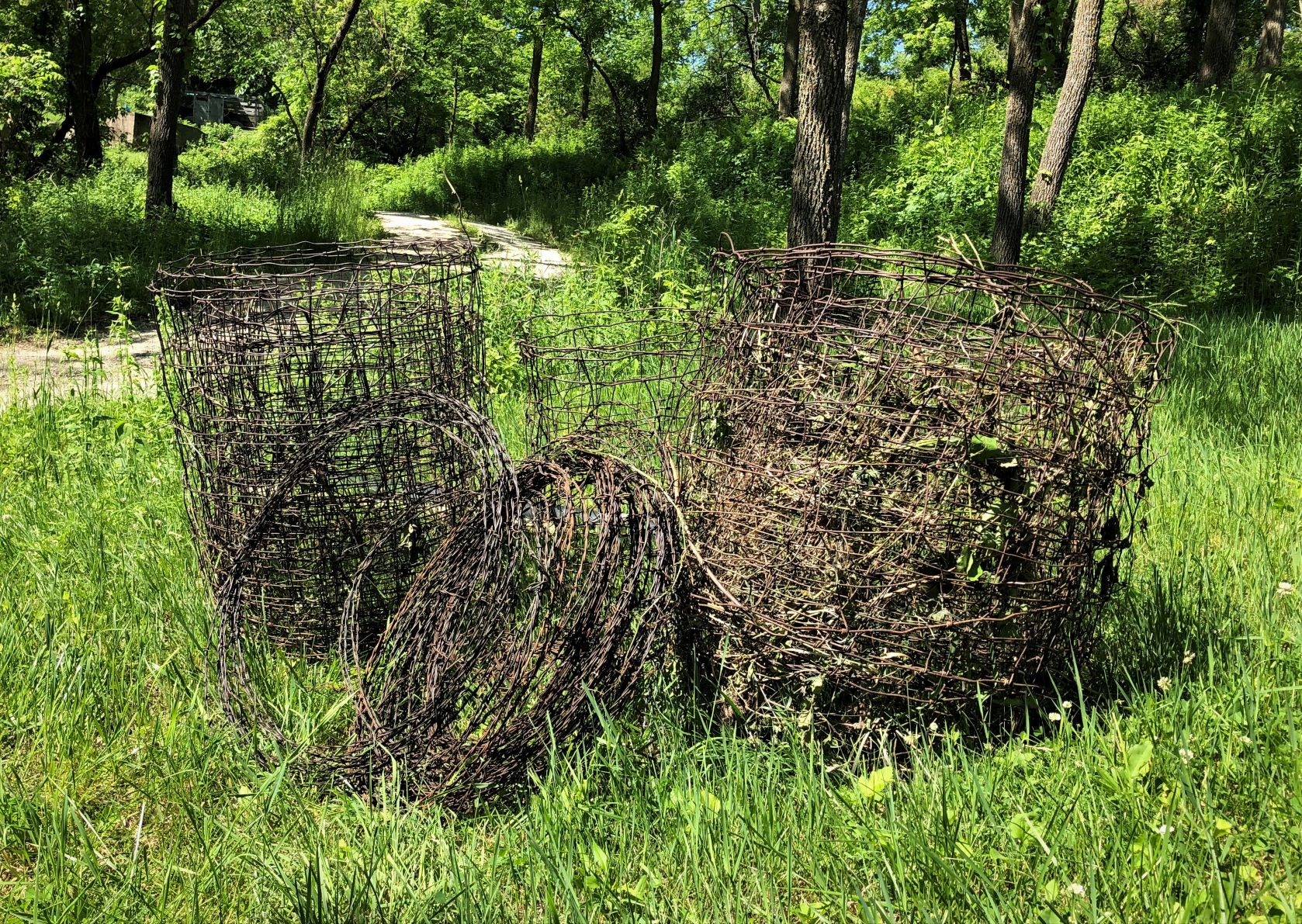
Barb and me. Me and barb. Barb Wire.

It is not a good relationship. I hate barbed wire, and all available evidence would indicate that it hates me.

Over the course of 35 years I have probably strung two miles of barbed wire on our farm. Now I am pulling much of it out, along with another few miles of “subterranean” wire that generations of farmers before me have strung for cattle fencing, wire which long ago collapsed and is hidden along the brushy borders of pastures and hayfields that have changed boundaries.

Yes, I know those old cattlemen couldn’t keep cows and calves in a field without sturdy barbed wire fencing (at least 36 inches high, four strands, steel posts, solid wood post corners), but there’s been many a day I wished electric fencing had been invented a hundred years ago. Or that American tastes had preferred mutton to beef.

Continue reading

Posted in Barbed Wire, Pasture Fencing | Tagged , | Leave a comment

Culvert cleaning

Opening the culvert pipe during a rainfall. (Photo by Patti Johnson)

In the event of thunderstorms and torrential rains, check that the culvert is open and the gush of runoff water is flowing unobstructed through the pipe!

And because of the changing climate, we are now frequently beset by thunderstorms and torrential rains. Twice in the past few years floods have seriously damaged the culvert – the embankment that spans a steep and narrow water course on the south edge of our farm, the base for the first 20 yards of our driveway. We have learned from harsh experience to check the opening of the culvert’s corrugated steel pipe immediately after a rainstorm (and sometimes during a rainstorm) to make certain it is not blocked by debris which causes the flood water to pool in the catch basin and wash across the top of the embankment.

Continue reading

Posted in Culvert Cleaning | Tagged | 2 Comments