A modest proposal

IMG_2171My modest proposal for revising firearms legislation and regulations seems only fair. If Congress insists that their constituents are expected to accept the presence of an armed man in a discount store, an AR-15 rifle in his shopping cart and a semi-automatic pistol in a holster on his belt, shouldn’t they accept the presence of the very same armed man in the halls of the Capitol Building?

A modest proposal on firearm legislation

As a series of horrendous shootings erupts across the United States – and as the U.S. House of Representatives and the Senate resume their contentious debates about federal legislation regulating firearms – I offer a modest proposal for our elected officials to consider: Amend federal laws, District of Columbia ordinances, and Capitol Hill security procedures so that Congressmen and Senators work and live with the same risks and responsibilities that their constituents enjoy in an America where firearm ownership is everyone’s right and privilege.

Currently, U.S. Congressmen and Senators are insulated from the country’s gun culture by the implementation of these restrictive laws, ordinances, and security measures, and it is apparent that this isolation from the normal, day-to-day association with armed citizens has created for them a separate reality that affects their perception of firearm ownership and use, a situation that jeopardizes the Second Amendment. Clearly, legislators cannot make wise decisions on gun legislation if they are not players in the game.

Continue reading

Posted in Firearms Legislation, Gun Control | Tagged , , | Leave a comment

End of the line

Blog Post - New Years Eve

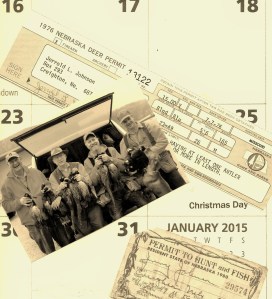
Sport hunting has been in decline throughout my lifetime, and its demise is not long away. For those who live in an urban society and culture, sport hunting is increasingly more expensive and time consuming, an activity made more and more difficult because of decreasing opportunities, disappearance of places to hunt, and the competition of less demanding and more easily accessible entertainments.

End of the line

Decades from now, after guiding their doddering old Great-Grandpa Coot through the hallways of their elementary school building, my great-grandchildren will steady my walker and help me into a comfortably padded seat at the front of their classroom. I will have been invited to speak to students, in the style of the Foxfire oral history memoirists, about a curious cultural phenomenon that was widely practiced in the long-ago days of my youth but has vanished in the 21st century: sport hunting.

Some of the questions posed by students will be awkward, perhaps even painful, to answer.

Q. “You kept hunting dogs in kennels so that you could use them to hunt pheasants?”

A. “Yes, and quail and grouse and woodcock and other game birds. But my dogs were in my house more than in their kennels.”

Q. “You hunted deer with a bow and arrows, like the prehistoric Ojibwe tribes in Minnesota?”

A. “Sort of. But they were much better hunters. I used a compound bow, which I wanted to show you. But I wasn’t allowed to bring it into the school.”

Q. “So you killed animals, and ate them?”

A. “Yes. Wild game was a regular part of our meals.”

Q. “Ewwww! What did it taste like?”

A. “It tasted much better than the meat you get at McDonald’s.”

Then the most discomfiting questions of all.

Q. “Did your children hunt? Do any of your grandchildren or great-grandchildren hunt?”

A. “No, they don’t. A dozen generations of my family hunted, first for subsistence and then for sport. But I’m the end of the line. After me, there were no more hunters.”

That scenario is probably too far-fetched. Hunting will still be a viable outdoor sport fifty years from now, but in all likelihood it will be a pastime of the wealthy, a recreation pursued on pay-to-hunt game farms, fly-in hunts to remote wilderness areas, or guided hunting excursions to distant places on the globe. Remnant populations of wild animals, some would say token populations, will be maintained through careful management by government agencies or private entrepreneurs, and the expensive shooting permits required to hunt them will be purchased by the affluent, much like the hunting lodges and preserves of Europe or the trophy big game safaris in Africa today.

Sport hunting has been in decline throughout my lifetime, and its demise is not long away. For those who live in an urban society and culture, sport hunting is increasingly more expensive and time consuming, an activity made more and more difficult because of decreasing opportunities, disappearance of places to hunt, and the competition of less demanding and more easily accessible entertainments.

If someone had told me, fifty years ago, that golfers would soon outnumber hunters two-to-one, I would have been incredulous. This year, about 30 million people will play golf, more than twice the number of hunters who will go afield.

That number of hunters, 14.5 to 15 million, does not at first glance appear to be a species headed for extinction, but consider the significant decline in the percentage of the population that hunts.

In 2015, according to data from the U.S. Census Bureau, the total population of the United States was about 321,500,000. About 14.8 million people last year bought at least one hunting license, permit, or tag, according to data compiled by the U.S. Fish & Wildlife Service. The current percentage of hunters in the population is therefore about 4.6 percent.

In 1965, fifty years ago, the total population of the United States was about 194,300,000 people. About 14.3 million people bought hunting licenses, permits, or tags that year: 7.3 percent.

Even in my North Country home state of Iowa, where hunting is more a part of the culture than in more populous and urban states, the numbers are startling. In 1965, about 311,000 of Iowa’s 2.74 million residents were hunters: 11.3 percent. In 2015, there were about 220,000 hunters among a total population of 3.12 million: 7.0 percent.

Other states where I hunt are experiencing smaller declines. South Dakota seems to buck the trend of decreased numbers of hunters: 163,477 in 1965 (23.6 percent of its total population of 692,000) compared to 244,182 in 2015 (28.8 percent of its population of 859,000), an increase of almost 81,000. But I note that South Dakota’s sales of non-resident tags, permits and stamps jumped from 48,295 in 1965 to 138,034 in 2015, up more than 89,000, so the gain in numbers over the past fifty years may be attributed to the state’s success in marketing and advertising to out-of-state hunters rather than the growing interest of South Dakota residents.

Minnesota, where the hunting tradition and culture is strong, has gone through a lesser decline. In 1965, there were 425,400 hunters among a population of 3.59 million people: 11.8 percent. Fifty years later, when total population had grown to about 5.49 million, there were about 592,124 hunters: 10.7 percent.

Nationally, the slow decrease in the number of hunters and the sharp decline in the percentage of people who hunt are exacerbated by societal trends that promote participation in “urban” sports (golf, tennis, bowling, volleyball, soccer, softball, bicycling, etc.) and discourage participation in hunting. Anecdotally, anyone who has tried in recent years to gain permission to hunt on private property will attest to the difficulty of finding places to hunt, and the ever-increasing price of hunting licenses, stamps, permits, travel, and equipment makes a golfing weekend appear more rewarding in regard to time and money spent.

There is also a growing disassociation with the blood sports. I seldom encounter anyone with a staunch anti-hunting attitude, but I frequently meet outdoor sports enthusiasts who simply have no interest in hunting. Not all the blood sports are losing participants; the number of people who fly fish continues to grow. But you cannot “catch and release” a whitetail deer or a ring-necked pheasant, and compared to hooking trout from state-operated fish hatcheries the appropriateness of shooting pen-raised game birds (let alone big game animals) is questionable – even for me.

My casual observation is that hunters, as a group, are getting significantly older, aging out of the sport. A 2009 report by the National Shooting Sports Foundation does not support this observation, stating that the age of people who buy hunting licenses increased only slightly over the four-year period 2005-08, from about age 41 to age 42. But if that trend has continued, the average age of hunters is now about 44, and I do not see a flock of youngsters being brought up in families with hunting histories and traditions.

This all bodes ill for the future of hunting, as my generation has known it. Over the course of the next quarter century sport hunting may wither away and become a curious relic of America’s history, like flights in biplanes at the county fair or cattle round-ups on dude ranches.

On the other hand, as a curiosity I may be of much greater interest to my great-grandchildren. Bringing an Old Coot to school for “show and tell” could enhance their reputation as descendents of an eccentric family and at the same time get me out of the nursing home for a day.

Q.  “When was the last time you hunted?

A. “This morning. I hunted an hour for my eyeglasses. Bagged a pair and then took a nap.”

In the meantime, my dogs and I will keep at it as long as our aging bodies are able.

_______________________________________________________

More stories about wildlife, outdoor ventures, hunting, fishing, and life in the North Country are published in my three collections of essays, Crazy Old Coot, Old Coots Never Forget, and Coot Stews , and my novel, Hunting Birds. All are available in Kindle and paperback editions at Amazon.com, and in paperback edition at the North Country bookstore Dragonfly Books in Decorah, Iowa, and through IndieBound independent bookstores.


Posted in Hunting | Tagged | 2 Comments

Lessons in deer rifle protocol and good manners

With deer rifles, always follow the basic rules of safety. And proper protocol. And good mannners.

With deer rifles, follow the basic rules of safety. And proper protocol. And good manners.

You can always tell a Czech, you can always tell Finn,
You can always tell a Limey when he’s had a shot of gin.
You can always tell a Canuck from ’way north Ontario,
You can tell an old Swede farmer if you tell him really slow.
You can always tell a Rooskie, you can always the Deutsch,
But if you try to tell a Norsky, well you cannot tell him much.

Lessons in deer rifle protocol and good manners

Talking about deer rifles can be a dangerous topic. It’s okay if you get on your high horse now and then and brag about your rifle while you drink a few beers at the Bohemian Lounge (which is the best bar and grill in Verdigre, Nebraska), especially if you have just shot a bragging-size buck and have a picture of it on your vest pocket camera or your cell phone. Nobody is going to take offense at that, except the boys at the bar will probably tell you that you’re full of prunes when you say you can shoot half-inch groups at a hundred yards.

But if you talk down another man’s deer rifle you are likely to get a trip to the Knox County Veterans Memorial Hospital Emergency Room like Emil Novotny and Arnie Hjermelund did several years ago. It was all about good manners.

Continue reading

Posted in Deer Hunting, Hunting Humor, Hunting Rifles | Tagged | Leave a comment

Through a hunter’s eyes

Clusters of wildl flowers I call prairie daisies dot our hay field in early summer. My wife Patti tells me their true name is oxeye daisy.

Clusters of wild flowers I call prairie daisies dot our hay field in early summer. My wife Patti tells me their true name is oxeye daisy.

Sasha and Abbey know they are not really hunting on this morning walk but some manic corner of my mind does not, and I allow my awareness of nature and its wild beauty to be restricted by my ingrained habit of always acting, and seeing, like a hunter.

Through a hunter’s eyes

Bird hunters wander around looking at wild things in the summer, but truth be told we do not see all that we should. We’re out there watching for an hour or more each day because our dogs must be exercised and worked through these sultry months so that they do not become fat and stale and lethargic (or worse: psychotic for lack of the stimuli and action that their canine minds and bodies demand). But we are usually watching the wrong things because we view the wild through a hunter’s eyes.

We are focused tightly on the visual clues that are linked to the species that we hunt. The broken stems of grasses and forbs along the edge of a trail that mark the passing of a doe and her fawn that morning. The trampled weeds and circle of feathers that are “forensic evidence” that a fox caught a hen pheasant on her nest during the night. The “whitewash” spatters of droppings in the new growth timber that tells us a woodcock has built her nest somewhere nearby and is finding a goodly supply of earthworms in the shallow loam to keep her and new newly hatched chicks well fed.

Our field of vision tends to be narrow, restricted to that “middle distance” where there is really not much to be observed.

Continue reading

Posted in Conservation, Land Ethic | Tagged | 4 Comments

Notta lotta difference

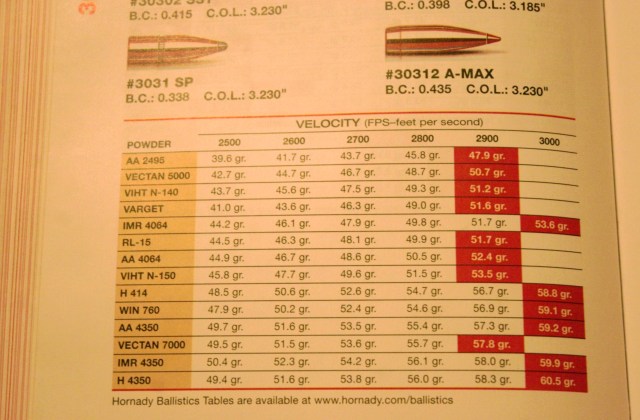
IMG_2100In this era of once unimaginable bullet design and construction, the superb quality of factory loaded ammunition, the excellence of CNC manufactured rifle barrels and actions, and the equally impressive quality and reliability of telescopic sights, there is notta lotta difference in the performance of hunting rifles.
Notta lotta difference

Not that it will put an end to the great debate, but I’ll state my two cents’ worth regarding the caliber of the rifle you choose to do your hunting on the North American continent: It does not make a lot of difference.

Pick the style of rifle that strikes your fancy (bolt action, lever action, slide action, single shot…) in the caliber that most appeals to your practical nature (or your quirky fascination) and get out in the field. After following deer camp disputes and hunters’ off-season harangues for decades, I’m here to proclaim an end to the hostilities. In regard to ballistics and bullet performance on game there is so little difference among the hunting calibers of rifles that it is a waste of time and energy (and often good beer spilled) to argue that one is superior to another.

Continue reading

Posted in Hunting Rifles, Rifle Hunting | Tagged | Leave a comment

Living in the cloud

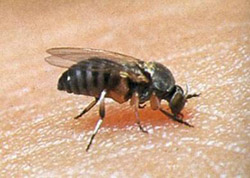
Photo from the Illinois Department of Public Health website, www.idph.state.il.us/envhealth/pcblackflies_buffalognats.htm

Photo from the Illinois Department of Public Health website, http://www.idph.state.il.us/envhealth/pcblackflies_buffalognats.htm

In the wetter parts of the northern latitudes of North America black fly populations swell from late April to July, becoming a nuisance to humans engaging in common outdoor activities such as gardening, boating, camping, and backpacking.
            – from a Department of Natural Resources website advisory


Life in the cloud

Late spring in the North Country is the time of life in the cloud. Not the ethereal cloud of happiness and hope and optimism. Or the “cloud computing” digital information cloud. Or the cloud of confusion that is fast becoming my normal state of mind.

No, the clouds in which we live during these warm days of May and June are the swarming clouds of black gnats that rise by the thousands from the streams, ponds, pools, puddles, and maybe even the dew-dampened grass to torment us, driving us to the brink of insanity with their buzzing, crawling, and biting. These buffalo gnats, one of the dozens of species of tiny black flies that infest the North Country each spring, remind us that every earthly paradise has its demons and devils.

Like vampires, buffalo gnats are hematophagic – blood-feasting monsters. The blood does not have to be human; other mammals and most birds are also unwilling donors. Entomologists tell us that black flies, both male and female, actually feed on the nectar of plants, but the females need to ingest blood to produce eggs. So they bite.

Continue reading

Posted in Buffalo gnats | Tagged , | Leave a comment

Mowing your what?

Hay field lane

A telephone conversation that only country people would understand.

Caller: “I tried to call you earlier today, but you didn’t answer.”

Me: “Yeah, I’ve been outside all afternoon, mowing my driveway.”

Caller: (pause) “Mow-ing your drive-way…”


Posted in Country Life, Uncategorized | Tagged | 1 Comment

Something peculiar


'The Hunter,' a Norwegian flat-plane carving by Harley Refsal.

‘The Hunter,’ a Norwegian flat-plane carving by Harley Refsal.


In the very long struggle to find out your own true character there is the real possibility you’ll discover a simpleton beneath the skin, or at least something deeply peculiar.

            – Jim Harrison (1937-2016), American writer of novels, novellas, short stories, essays, screenplays, reviews, and poetry; from Hunting with a Friend, the introduction he wrote for Guy de la Valdene’s book For a Handful of Feathers


Something peculiar

A man’s realization that his character is peculiar does not slowly come to fruition; it arrives in a shattering moment of clarity. Not exactly an epiphany but more of a painful and embarrassing revelation, this sudden shift in self-perception is harsh and wounding: obviously true but hard to accept. Like learning from a trusted source that the madly romantic fling of your college years dumped you because she found you deadly dull and boring.

Too many of these moments are based on something you say in the company of acquaintances (not friends), often in professional situations. Gathered around a conference table with the nine people involved in the restructuring of your department, for example, you might say: “That organization chart is more convoluted than a woodcock’s guts.” The awkward silence and stares that follow make you aware that you are the only person in the 193-employee organization who has ever seen a woodcock’s guts, and that fact alone makes you peculiar, even bizarre, in a world where the woodcock does not hold mythical status – or even name recognition.

Continue reading

Posted in Friendship | Tagged , | 2 Comments

Collisions with the future

GC city center (2)

City Center updates include history scene murals painted on building walls to show visitors how it once was and how progress has made it better.

Life is a series of collisions with the future; it is not the sum of what we have been, but what we yearn to be.
            – José Ortega y Gasset (1883-1955), Spanish philosopher and essayist, author of Meditations on Hunting, first published in 1947

Collisions with the future

Days spent in major metropolitan areas make my spirit uneasy, and last week’s visit to my erstwhile hometown was no exception. Walking streets with familiar names I found few traces remain of the haunts of my youth, but after 50 years’ absence that is to be expected in any town not locked in a Twilight Zone stasis of frozen time.

Many of the changes I encountered, however, were not the typical transformations of a once-rural region undergoing rapid urbanization; they were more in the nature of Spanish philosopher José Ortega y Gasset’s “collisions with the future.” Most were predictable outcomes of the incorporation of a farming community of 5,000 population into an urban sprawl of two million people: streets jammed with constant vehicular traffic, public places crowded with impatient people, long lines at service counters, the clamor and confusion of construction and renovation of buildings and facilities both private and public. But some changes were surprisingly positive: increased park and playground areas, for example, that were better designed, configured, and maintained, and also much greener and connected by hiking and biking trails.

Continue reading

Posted in Hometowns, Uncategorized | Tagged | 2 Comments

One perfect bird

OLYMPUS DIGITAL CAMERA

One perfect bird is far, far more rewarding than a limit of fortuitous birds, and the recollection of the hunt for that bird will strike sparks in your memories of great moments afield long after dozens of easily brought-to-bag birds have faded to smoky, half-forgotten images.

One perfect bird

Some time ago, 30 years at least, the hunter’s archetypal goal of “bagging a limit” of birds in the course of a day’s hunt lost its urgency and luster, its once sacred place as a tenet of my outdoor ethic. Perhaps this is because shooting a limit of birds seemed too often wayward and therefore lacked any sense of achievement or even satisfaction.

There came a morning when I shot three rooster pheasants in less than a half hour in the field, all of them serendipitous gifts of the Red Gods. On the mildest of October days, my springer spaniel Molly and I stumbled upon them unexpectedly in thin cover, each bird was an easy shot, and her retrieves were routine and mundane.

Before the true exhilaration and enchantment of this opening day’s hunt had even begun, it was over. If shooting a limit is the quintessence of the sport I should have been (with three sets of gaudy tail feathers jutting from the bag of my bird vest) floating back to my pickup in an aura of rapture, or at least flushed with feelings of success and fulfillment. In fact, I felt empty and even a bit disappointed.

I had come to that time of a bird hunter’s life when the act of hunting, not simply the taking of game, was the source of the day’s enjoyment, to that moment of awareness that a bird in the hand is most assuredly not worth two in the bush. Molly was of the same mind. In her travel box on the drive home I could hear her singing the canine version of Peggy Lee’s “Is That All There Is?”

Continue reading

Posted in Bird hunting | Tagged | 1 Comment