
Klas took it down and spent several minutes in a more careful investigation. It was just a hat, a fawn-brown Tyroler with a braided, black leather hatband. Its sweatband was smooth, perhaps doeskin. Except for its too-square cut, there was nothing unusual about it.
 Tyroler hat
Perched on top of a crosshatched pile of alders that the beavers had felled during the summer but had not dragged to their dam at the head of their pond. That is where he found the Tyroler hat, he told me. Right out in the open, at the edge of the clearing on the downstream side of the oxbow loop in Wolf Creek. As if someone had tossed it there and left it behind, unintentionally, most likely, and had forgotten it until it was too late in the day to go back.
The Tyroler hat, it looked almost new, he said. Its sweatband was a little stained and there was a spatter of dried mud on the brim, but otherwise it could have been a first-season hat that some Orvis-coat, city-bred grouse hunter had ordered from a haberdasher’s custom shop so that he could play the role of an Austrian gentry hunter when he ventured out for the first time in the northern Minnesota aspen forests. You see that kind of thing every few years.
Klas Svenson. He said that was his name, although his short pause before he introduced himself made me doubt that was true. We were the only two patrons in the bar in Duquette at the end of an October afternoon, and having bagged three woodcock and two grouse over my hard-working dog I was in a magnanimous mood and offered to buy him a beer. He ordered a Grain Belt, so I was sure he was a local.
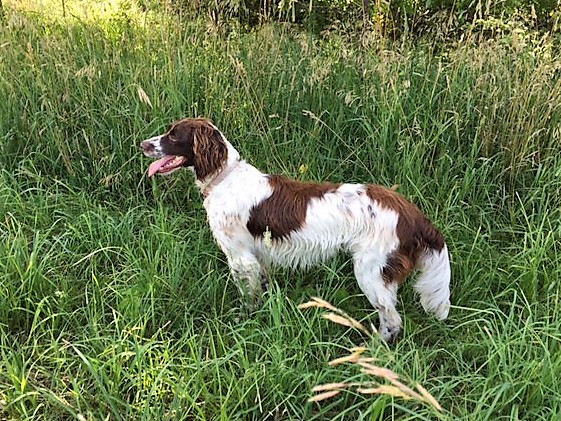
 Abbey began to lecture me: “Wahrl-arn-wahrl-yawl!” which, translated from spaniel French to North Country English means “Pheasant season only lasts eleven weeks, you know, and every day spent in the Clubhouse is wasted, lost forever and cannot be regained.”





 Dispatches from a Northern Town